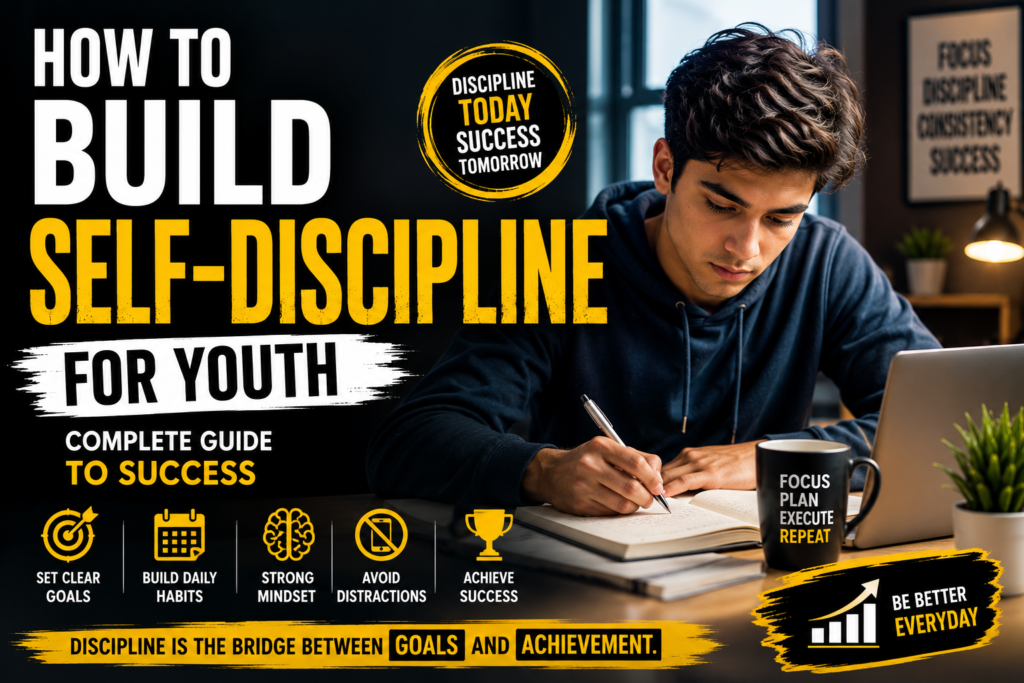
How to Build Self-Discipline: The Ultimate Guide for Youth
Introduction: Why Self-Discipline Matters More Than Talent
In today’s fast-moving digital world, young people are surrounded by distractions every second. Social media notifications, endless entertainment, short-form videos, gaming addiction, procrastination, unhealthy routines, and comparison culture are silently destroying focus and productivity. Most young people want success, but very few are ready to build the discipline required to achieve it.
The truth is simple: talent may help you start, but self-discipline helps you finish.
Every successful athlete, entrepreneur, student, artist, creator, writer, business owner, or leader has one thing in common — they learned how to control their mind, emotions, habits, and actions.
Self-discipline is not punishment.
Self-discipline is freedom.
It gives you the power to:
- Wake up early even when you don’t feel like it
- Study when others waste time
- Exercise consistently
- Save money
- Build confidence
- Stay focused on long-term goals
- Control emotions and impulses
- Become mentally stronger
How to Build Self-Discipline people often believe motivation is enough. But motivation is temporary. Discipline is permanent.
Motivation says:
“I feel like doing it.”
Discipline says:
“I will do it whether I feel like it or not.”
This blog is a complete guide for youth who want to build self-discipline and transform their lives. Whether you are a student, aspiring entrepreneur, content creator, athlete, or someone trying to improve your life, this guide will help you understand the psychology, habits, mindset, and systems behind self-discipline.
By the end of this blog, you will learn:
- What self-discipline really means
- Why most young people struggle with discipline
- The psychology behind laziness and procrastination
- How habits shape your future
- Daily routines for building discipline
- Practical strategies to improve focus
- How to stop overthinking and procrastinating
- How to build mental toughness
- The relationship between discipline and success
- Long-term strategies to stay consistent
If you truly apply these lessons, your entire life can change.
Chapter 1: What Is Self-Discipline?
Self-discipline is the ability to control your actions, emotions, thoughts, and behavior in order to achieve long-term goals.
It means choosing what matters most over what feels good right now.
For example:
- Studying instead of scrolling social media
- Exercising instead of sleeping late
- Saving money instead of wasting it
- Working on your goals instead of procrastinating
- Staying calm instead of reacting emotionally
Self-discipline is not about being perfect.
It is about staying consistent.
Most people misunderstand discipline. They think disciplined people are born differently. But discipline is not genetic. It is a skill.
Just like muscles grow through training, discipline grows through repeated action.
The more you practice self-control, the stronger your discipline becomes.
Discipline vs Motivation
This is one of the most important lessons every young person must understand.
Motivation is emotional.
Discipline is behavioral.
Motivation changes daily.
Discipline stays even on bad days.
You cannot depend on motivation forever.
Some days you will feel tired.
Some days you will feel sad.
Some days you will not feel inspired.
But disciplined people still take action.
That is why discipline creates success.
The Hidden Power of Discipline
Self-discipline affects every area of life:
1. Academic Success
Disciplined students study regularly, complete assignments on time, and avoid distractions.
2. Financial Success
Disciplined people avoid unnecessary spending and build wealth slowly.
3. Physical Health
Discipline helps people maintain healthy eating, exercise, and sleep routines.
4. Mental Strength
Discipline builds emotional control and resilience.
5. Career Growth
Consistent effort leads to skill development and opportunities.
6. Relationships
Disciplined communication improves trust and respect.
The quality of your discipline determines the quality of your future.
Chapter 2: Why Most Youth Struggle with Self-Discipline
Modern life is designed to destroy focus.
Technology companies spend billions of dollars to keep your attention trapped.
Every notification, reel, video, and endless scroll is carefully engineered to release dopamine in your brain.
Dopamine is the brain chemical linked to pleasure and reward.
The problem is that constant dopamine stimulation weakens your ability to focus on difficult tasks.
That is why many young people struggle with:
- Short attention spans
- Lack of focus
- Laziness
- Procrastination
- Mental fatigue
- Low patience
- Inconsistent routines
Instant Gratification vs Delayed Gratification
This is the biggest battle of modern youth.
Instant gratification means choosing short-term pleasure.
Examples:
- Watching videos instead of studying
- Eating junk food instead of healthy meals
- Spending money impulsively
- Sleeping instead of working out
Delayed gratification means sacrificing comfort today for a better future tomorrow.
Disciplined people master delayed gratification.
They understand:
- Success takes time
- Results are not instant
- Progress requires patience
The Comfort Zone Trap
The human brain naturally avoids discomfort.
Your mind wants:
- Comfort
- Easy pleasure
- Familiar routines
- Low effort
But growth only happens outside the comfort zone.
Every time you choose discipline over comfort, you become mentally stronger.
Lack of Purpose
Many young people lack discipline because they lack direction.
When you do not know why you are working hard, you lose consistency.
Purpose creates energy.
Purpose creates focus.
Purpose creates discipline.
That is why defining meaningful goals is important.
Chapter 3: The Psychology of Self-Discipline
Understanding the psychology behind discipline can help you control your behavior better.
Your Brain Has Two Systems
1. Emotional Brain
This part wants:
- Comfort
- Entertainment
- Pleasure
- Easy rewards
2. Rational Brain
This part thinks about:
- Long-term goals
- Logic
- Planning
- Future success
Self-discipline happens when the rational brain becomes stronger than emotional impulses.
The Habit Loop
Every habit follows a pattern:
Cue
Something triggers behavior.
Routine
You perform the action.
Reward
Your brain receives pleasure.
For example:
Cue: Feeling bored
Routine: Open social media
Reward: Dopamine stimulation
This loop repeats until habits become automatic.
The key to discipline is replacing bad habits with productive habits.
Neuroplasticity and Discipline
Your brain changes according to repeated behavior.
This process is called neuroplasticity.
If you repeat disciplined actions daily, your brain adapts.
Over time:
- Focus improves
- Self-control increases
- Productivity becomes easier
- Positive habits become automatic
Discipline is not magic.
It is brain training.
Chapter 4: The Importance of Goals in Building Discipline
Without goals, discipline becomes meaningless.
Goals give direction to effort.
Imagine driving a car without knowing the destination.
Eventually, you will stop moving.
The same happens in life.
Types of Goals
Short-Term Goals
These are daily or weekly goals.
Examples:
- Study 2 hours daily
- Wake up at 6 AM
- Exercise 30 minutes
Long-Term Goals
These are future achievements.
Examples:
- Becoming financially independent
- Cracking competitive exams
- Building a successful career
- Starting a business
SMART Goal Method
Your goals should be:
Specific
Clear and defined.
Measurable
Trackable progress.
Achievable
Realistic but challenging.
Relevant
Connected to your future.
Time-Bound
Have deadlines.
Why Goals Increase Discipline
Goals create:
- Focus
- Clarity
- Motivation
- Accountability
- Direction
People without goals become distracted easily.
Chapter 5: How to Build Self-Discipline Step by Step
Step 1: Start Small
Most people fail because they try to change everything overnight.
Do not start with extreme routines.
Start small.
Examples:
- Read 5 pages daily
- Exercise for 10 minutes
- Study for 25 minutes
- Wake up 15 minutes earlier
Small wins build confidence.
Step 2: Build Consistency
Consistency matters more than intensity.
Doing something daily for 30 minutes is better than doing it once for 5 hours.
Discipline grows through repetition.
Step 3: Remove Distractions
Your environment shapes behavior.
If your phone constantly distracts you, discipline becomes harder.
Practical steps:
- Turn off notifications
- Use focus apps
- Keep your study area clean
- Avoid toxic environments
- Limit screen time
Step 4: Create Routines
Successful people follow routines.
Routines reduce decision fatigue.
When actions become automatic, discipline becomes easier.
Step 5: Learn to Do Difficult Things
Discipline grows when you intentionally face discomfort.
Examples:
- Cold showers
- Difficult workouts
- Public speaking
- Studying challenging topics
- Waking up early
Doing hard things trains mental toughness.
Chapter 6: Morning Routines That Build Discipline
Your morning shapes your entire day.
Most undisciplined people start mornings with:
- Snoozing alarms
- Scrolling social media
- Rushing mindlessly
- Low energy habits
Disciplined people protect their mornings.
Ideal Morning Routine for Youth
Wake Up Early
Early mornings improve:
- Focus
- Productivity
- Mental clarity
- Emotional stability
Avoid Phone Usage
Do not start the day with dopamine overload.
Avoid social media for at least 30 minutes after waking.
Exercise
Physical activity improves:
- Brain function
- Energy
- Mood
- Confidence
Plan the Day
Write:
- Top priorities
- Important tasks
- Goals for the day
Read or Learn
Spend time improving your knowledge.
Reading develops discipline and focus.
Chapter 7: How to Stop Procrastination
Procrastination is one of the biggest enemies of discipline.
It destroys:
- Confidence
- Productivity
- Mental peace
- Growth
Why People Procrastinate
Fear of Failure
People avoid tasks because they fear making mistakes.
Perfectionism
Waiting for the perfect time prevents action.
Overwhelm
Large tasks create mental pressure.
Lack of Clarity
Confusion reduces action.
Low Energy
Poor sleep and unhealthy habits reduce productivity.
How to Beat Procrastination
Use the 5-Minute Rule
Tell yourself:
“I will do this for just 5 minutes.”
Starting is the hardest part.
Break Tasks into Small Parts
Instead of:
“Study the whole chapter.”
Say:
“Read 3 pages.”
Use Time Blocking
Assign fixed times for work.
Eliminate Distractions
Create distraction-free environments.
Reward Progress
Celebrate small wins.
Chapter 8: The Role of Habits in Self-Discipline
Your life is controlled by habits.
Good habits create success.
Bad habits create failure.
Most actions you perform daily are automatic.
That means your future depends more on habits than motivation.
Keystone Habits
Some habits improve multiple areas of life.
Examples:
- Exercise
- Reading
- Journaling
- Meditation
- Sleeping early
These habits improve discipline naturally.
Habit Stacking
Attach new habits to existing routines.
Example:
- After brushing teeth → meditate
- After breakfast → read 10 pages
- After class → study 30 minutes
This makes habits easier to maintain.
Tracking Habits
Track progress daily.
Habit trackers increase awareness and consistency.
Chapter 9: Digital Discipline in the Modern World
Technology is useful.
But uncontrolled technology destroys discipline.
Most young people waste hours daily on:
- Reels
- Gaming
- Endless scrolling
- Random content consumption
The Dopamine Problem
Social media provides constant dopamine stimulation.
This reduces:
- Focus
- Patience
- Deep thinking ability
- Productivity
Signs of Digital Addiction
- Constant phone checking
- Difficulty focusing
- Anxiety without devices
- Reduced attention span
- Sleep problems
How to Build Digital Discipline
Set Screen Time Limits
Use app timers.
Create No-Phone Zones
Examples:
- Study table
- Bedroom
- Dining area
Use Technology Intentionally
Consume content that teaches, inspires, or improves skills.
Schedule Entertainment
Do not consume entertainment randomly.
Chapter 10: Discipline and Physical Health
Your physical condition affects your discipline.
A weak body creates:
- Low energy
- Laziness
- Brain fog
- Low confidence
Exercise Builds Discipline
Exercise teaches:
- Consistency
- Patience
- Delayed gratification
- Mental toughness
Sleep and Discipline
Poor sleep destroys:
- Focus
- Emotional control
- Productivity
Youth should aim for 7–8 hours of quality sleep.
Healthy Nutrition
Food affects brain performance.
Avoid excessive:
- Junk food
- Sugar
- Processed foods
Eat foods that improve energy and focus.
Chapter 11: Mental Toughness and Emotional Discipline
Discipline is not only physical.
It is emotional.
Emotionally disciplined people:
- Stay calm under pressure
- Control anger
- Handle criticism maturely
- Stay focused during difficulties
How to Build Emotional Discipline
Practice Delayed Reaction
Do not react emotionally immediately.
Pause.
Think.
Respond calmly.
Learn Stress Management
Use:
- Deep breathing
- Meditation
- Journaling
- Exercise
Accept Discomfort
Life will not always feel good.
Discipline means continuing despite discomfort.
Chapter 12: Self-Discipline and Confidence
Confidence is built through action.
Every time you keep promises to yourself, confidence increases.
Every time you break promises to yourself, self-respect decreases.
Discipline Creates Self-Trust
When you consistently:
- Wake up on time
- Finish tasks
- Exercise
- Study
- Stay consistent
Your brain starts believing:
“I can trust myself.”
That creates confidence.
Chapter 13: Time Management for Disciplined Youth
Time is life.
How you spend your time determines your future.
Common Time-Wasting Activities
- Endless scrolling
- Gossip
- Overthinking
- Gaming addiction
- Watching random videos
Time Management Strategies
Prioritize Important Tasks
Focus on high-value activities.
Use a To-Do List
Write daily priorities.
Apply the Pomodoro Technique
Work 25 minutes.
Rest 5 minutes.
Learn to Say No
Protect your time from distractions.
Chapter 14: Discipline in Studies and Career
Students often struggle with consistency.
The secret is not studying harder.
It is studying smarter and consistently.
Study Discipline Tips
Create a Fixed Study Schedule
Train your brain to study at fixed times.
Remove Phone Distractions
Keep devices away while studying.
Focus on Deep Work
Deep work means uninterrupted concentration.
Revise Regularly
Consistency improves memory.
Career Discipline
Young people should focus on:
- Skill development
- Communication skills
- Networking
- Learning continuously
The future belongs to disciplined learners.
Chapter 15: How Environment Shapes Discipline
Your environment influences your habits more than motivation.
If you surround yourself with lazy people, your standards decrease.
If you surround yourself with disciplined people, your mindset improves.
Build a Productive Environment
Keep Your Space Clean
Clean environments improve mental clarity.
Avoid Negative Influences
Distance yourself from toxic people.
Join Growth-Oriented Communities
Spend time with ambitious individuals.
Follow Positive Content
Your mind becomes what you consume.
Chapter 16: Discipline and Financial Success
Money management requires discipline.
Most financial problems come from impulsive behavior.
Financial Discipline Habits
Save Regularly
Even small savings matter.
Avoid Impulsive Purchases
Ask:
“Do I really need this?”
Learn Financial Skills
Study:
- Budgeting
- Investing
- Business
- Money management
Financial freedom requires long-term discipline.
Chapter 17: The Role of Failure in Building Discipline
Failure is not the opposite of success.
Failure is part of success.
Most people quit after failure.
Disciplined people learn and continue.
Lessons Failure Teaches
- Patience
- Humility
- Persistence
- Adaptability
Every successful person has failed multiple times.
The difference is:
They did not quit.
Chapter 18: Discipline vs Motivation in Real Life
Imagine two students.
Student A studies only when motivated.
Student B studies daily regardless of mood.
After one year, who will improve more?
Obviously Student B.
Consistency beats intensity.
Small disciplined actions repeated daily create extraordinary results.
Chapter 19: How to Stay Consistent Long-Term
Many people start strong but quit quickly.
The real challenge is long-term consistency.
Strategies for Consistency
Focus on Systems
Do not obsess over results.
Focus on daily systems.
Forgive Small Mistakes
Missing one day is not failure.
Quitting completely is failure.
Track Progress
Measure improvement.
Stay Patient
Real growth takes time.
Remember Your Why
Strong reasons create strong discipline.
Chapter 20: Discipline and Leadership
Leaders are disciplined people.
People respect individuals who:
- Control emotions
- Stay consistent
- Keep promises
- Work hard
- Handle pressure maturely
Leadership begins with self-leadership.
If you cannot control yourself, you cannot lead others.
Chapter 21: The Power of Saying No
Discipline often means saying no.
No to:
- Distractions
- Toxic habits
- Laziness
- Temporary pleasure
- Negative influences
Every “no” to distraction becomes a “yes” to your future.
Chapter 22: Discipline and Identity
One of the most powerful ways to build discipline is changing identity.
Instead of saying:
“I want to study.”
Say:
“I am a disciplined student.”
Instead of:
“I want to get fit.”
Say:
“I am a healthy person.”
Identity shapes behavior.
When disciplined actions become part of identity, consistency becomes easier.
Chapter 23: Common Mistakes Young People Make
1. Waiting for Motivation
Motivation is unreliable.
2. Setting Unrealistic Goals
Extreme plans lead to burnout.
3. Comparing with Others
Comparison destroys focus.
4. Trying to Change Overnight
Real change is gradual.
5. Ignoring Health
Mental and physical health matter.
Chapter 24: The Relationship Between Discipline and Freedom
Many young people think discipline limits freedom.
Actually, the opposite is true.
Discipline creates freedom.
Examples:
- Financial discipline creates financial freedom
- Health discipline creates physical freedom
- Study discipline creates career opportunities
- Emotional discipline creates mental peace
Lack of discipline creates suffering.
Chapter 25: How Social Media Is Weakening Youth Discipline
Modern social media is designed to capture attention.
Algorithms reward:
- Instant entertainment
- Short attention spans
- Emotional reactions
This weakens:
- Patience
- Deep focus
- Critical thinking
Protecting Your Mind
You must become intentional about content consumption.
Ask yourself:
“Is this helping my future?”
If not, reduce it.
Chapter 26: Discipline in Relationships
Healthy relationships require discipline.
You must learn:
- Communication control
- Emotional maturity
- Loyalty
- Respect
- Patience
Undisciplined emotions damage relationships.
Chapter 27: Building Discipline During Difficult Times
Anyone can stay disciplined when life feels easy.
Real discipline appears during:
- Stress
- Failure
- Rejection
- Anxiety
- Hardship
How to Stay Strong
Focus on What You Can Control
Ignore unnecessary worries.
Maintain Basic Routines
Even during difficult times:
- Sleep properly
- Exercise
- Eat healthy
- Continue working
Avoid Escapism
Do not escape problems through addiction or distraction.
Face reality.
Chapter 28: Discipline and Success Stories
Every successful person values discipline.
Athletes train for years.
Entrepreneurs work consistently.
Writers practice daily.
Musicians repeat endlessly.
Success is usually boring repetition done consistently.
There is no shortcut.
Chapter 29: The 30-Day Discipline Challenge
If you want to transform your life, follow this challenge.
Daily Rules
- Wake up early
- Exercise 30 minutes
- Read 10 pages
- Avoid unnecessary social media
- Study or work deeply for 2 hours
- Drink enough water
- Sleep on time
- Write daily goals
Do this consistently for 30 days.
You will notice:
- Better focus
- Increased confidence
- Higher productivity
- Improved mental clarity
- Stronger self-control
Chapter 30: Self-Discipline for Students
Students today face extreme distractions.
The competition is increasing globally.
Students who master discipline gain massive advantages.
Key Discipline Habits for Students
Study Daily
Do not wait for exams.
Build Focus Sessions
Study without distractions.
Avoid Last-Minute Preparation
Consistency reduces stress.
Develop Reading Habits
Reading improves knowledge and communication.
Learn Skill Development
Degrees alone are not enough.
Develop:
- Communication skills
- Digital skills
- Critical thinking
- Leadership skills
Chapter 31: Discipline for Young Entrepreneurs
Entrepreneurship requires extreme discipline.
You must manage:
- Time
- Stress
- Money
- Rejection
- Uncertainty
Entrepreneurial Discipline Habits
Learn Daily
Business changes constantly.
Stay Consistent
Results take time.
Manage Finances Wisely
Avoid unnecessary spending.
Improve Communication
Business is built on relationships.
Build Long-Term Thinking
Short-term thinking destroys businesses.
Chapter 32: The Role of Reading in Self-Discipline
Reading trains the brain to focus deeply.
In a world of short attention spans, reading is mental training.
Benefits of reading:
- Improves focus
- Increases knowledge
- Builds patience
- Enhances vocabulary
- Strengthens critical thinking
Reading daily is one of the best discipline habits.
Chapter 33: Meditation and Mindfulness
Meditation strengthens self-awareness.
Most people live unconsciously.
They react emotionally without thinking.
Mindfulness teaches control.
Benefits of Meditation
- Better focus
- Emotional stability
- Reduced stress
- Improved self-control
- Increased awareness
Even 10 minutes daily can improve mental discipline.
Chapter 34: Why Discipline Beats Intelligence
Intelligence without discipline is wasted potential.
Many talented people fail because they lack consistency.
Meanwhile, average people with strong discipline achieve extraordinary success.
Why?
Because discipline creates momentum.to Build Self-Discipline
Chapter 35: The Hidden Cost of Laziness
Laziness feels comfortable temporarily.
But long-term laziness creates:
- Regret
- Low confidence
- Missed opportunities
- Financial problems
- Health issues
- Mental frustration
Every day wasted today becomes future regret.
Chapter 36: How to Rebuild Discipline After Failure
Sometimes you will lose consistency.
That is normal.
The key is restarting quickly.
Steps to Rebuild Discipline
Accept the Mistake
Do not waste time feeling guilty.
Start Small Again
Rebuild momentum gradually.
Remove Triggers
Identify what caused failure.
Focus on Progress
Perfection is unnecessary.
Chapter 37: Discipline and Confidence in Public Life
Disciplined people appear more confident because they trust themselves.
When you consistently improve yourself:
- Communication improves
- Body language improves
- Confidence increases
- Social anxiety decreases
Confidence is earned through action.
Chapter 38: The Importance of Accountability
Accountability improves discipline.
When others know your goals, you become more responsible.
Ways to Create Accountability
- Study groups
- Mentors
- Coaches
- Habit tracking
- Public commitments
Accountability increases consistency.
Chapter 39: The Discipline Mindset
Disciplined people think differently.
They understand:
- Short-term pain creates long-term gain
- Comfort delays growth
- Consistency matters more than perfection
- Failure is feedback
- Time is valuable
Mindset shapes actions.
Chapter 40: Final Thoughts — Your Future Depends on Your Discipline
Your future is not decided by luck.
It is decided by your daily actions.
Every habit matters.
Every choice matters.
Every day matters.
Self-discipline is the foundation of success, confidence, health, freedom, and personal growth.
Without discipline:
- Dreams remain dreams
- Goals remain unfinished
- Potential remains unused
But with discipline:
- Ordinary people achieve extraordinary things
- Confidence grows
- Opportunities increase
- Life improves steadily
Remember:
You do not need to become perfect overnight.
You only need to become slightly better every day.
Start small.
Stay consistent.
Trust the process.
The pain of discipline is temporary.
The pain of regret lasts much longer.
Your future self is watching the decisions you make today.
Choose discipline.
Choose growth.
Choose your future.
Conclusion
Self-discipline is not a talent gifted to a few lucky people.
It is a skill built through repeated action.
Every successful person once struggled with laziness, distractions, fear, and inconsistency.
The difference is they learned to act despite discomfort.
You have the same ability.
The sooner you build discipline, the faster your life changes.
Start today.
Not tomorrow.
Not next Monday.
Not next year.
Your future is built by what you repeatedly do now.
Discipline is the bridge between who you are today and who you want to become tomorrow.
How to Build Self-Discipline for Youth How to Build Self-Discipline for Youth How to Build Self-Discipline for Youth How to Build Self-Discipline for Youth How to Build Self-Discipline for Youth How to Build Self-Discipline for Youth How to Build Self-Discipline for Youth How to Build Self-Discipline for Youth .How to Build Self-Discipline for Youth How to Build Self-Discipline for Youth How to Build Self-Discipline for Youth How to Build Self-Discipline for Youth How to Build Self-Discipline for Youth